Reimagining the cities of “Fortitude” and “Courage”
My two steampunk adventure novels, “Fortitude” and its sequel “Courage”, have been let loose in the world. This will be the second time for “Fortitude” and the first time for “Courage”.
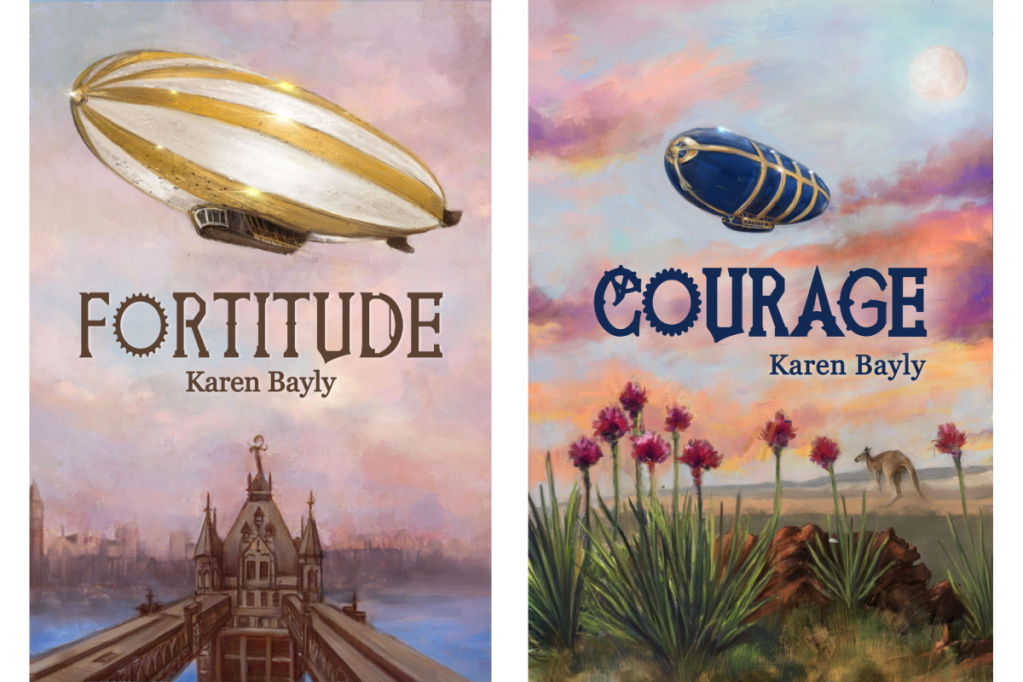
Many of the places described in these books may feel familiar to a reader, but the names will not. These have been changed. For example, there are two cities featured in these books – New Londinium in the Republic of Britannia (equivalent to London, England) and Cadi in Terra Australis (equivalent to Sydney, Australia).
So, I hear you ask, why didn’t you just stick with London, England and Sydney, Australia? Good question. The answer is simple. I wanted to anchor the world of these novels in a past history so alternative, it might as well be a different universe. I like the creative freedom doing so gives me. I like to explore a fresh perspective without the baggage of history tripping me up. Not that I have anything against history. Without acknowledging the sins of the past, we are likely to repeat them. However, I write plenty of dystopian stories where our sins not only catch up to us but beat us to a pulp. Sometimes, I have to dream we do things better.
The World of “Fortitude” – New Londinium
When I wrote “Fortitude”, I was keen to explore an alternative steampunk world, one that was not depressingly grimy and harsh like Victorian London. I wanted a world where the future seemed bright, clean, and egalitarian, one that suggested a few small (and not so small) changes in our past could have made a big difference to our future. I wanted to rewrite history.
So I did, starting with the premise that the Romans left Britain a little later than in our history. This served to develop a different political system in Britannia, one in which the role of kings and queens atrophied and eventually died, but that of lords and ladies lingered, as did the concept of democratic government. (Not that I have anything against monarchies – a good monarch is better than a tyrannical government or the political despots scattered across our current world.)

I stuck with the old Roman names for places where these existed in Roman times – “Brittania” (Britain), “Tamesis” (the Thames and derived from the Celtic “Tamesas”), “Floet Street” (Fleet Street), “Siluria” (South Wales and also of Celtic origin), “Caledonia” (Scotland) and “Londinium” (London). Like our world’s Londonium, which Boudica and the Icenians burnt to the ground, the “Fortitude” version was destroyed by fire (at a later date and not by Boudica) and rebuilt – hence “New Londinium”. I did not stick with Roman names outside of Britain – for example, the Roman name for Germany was “Germania”. I used “Franconia”, named after the Franks who once conquered and occupied that region.
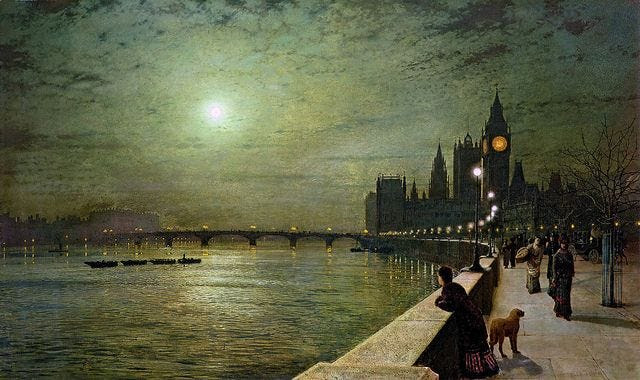
I studied TV shows set in Victorian London, especially “dark” fiction series such as “Ripper Street” and “Penny Dreadful”. I also watched the BBC 2 experiment “The Victorian Slum”, where 21st-century folk spent a few weeks living in an East End slum, Victorian style. I also collected images of Victorian England for reference. The London these shows and images depict is not as sparkly and clean as New Londinium, but both gave me context. In particular, I loved the paintings of John Atkinson Grimshaw, an artist noted for his nocturnal scenes of urban Victorian life. The light and moodiness of his works suited the feel of the story.
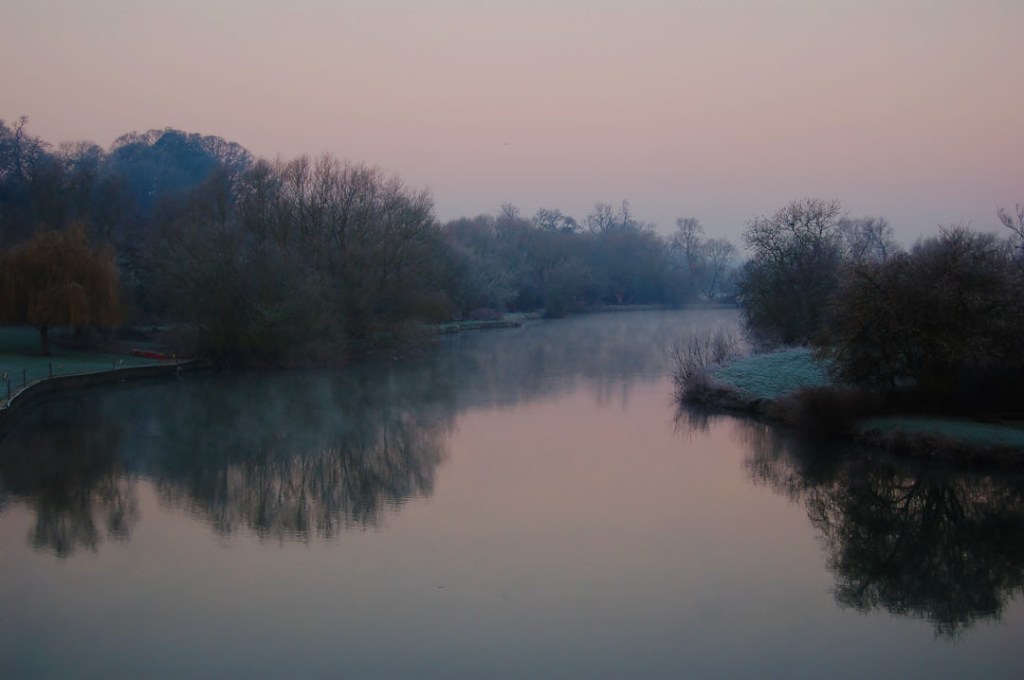
I’ve always had a bit of a thing for the River Thames. No idea why. I’ve never seen it, but its serpentine elegance and its role as backdrop to so much history captured my imagination years ago. It has graced the city and wound its way through more rural settings, connecting people and stories by water.
The World of “Courage” – Cadi
Again, I wanted to rewrite history. What if Australia had not been invaded by the British and set up as a penal colony? What if there had been a mutually agreeable settlement? Clearly, the names of cities and places would be very different.
Modern-day Sydney sits on Gadigal land with the CBD on an area known as Gadi. But even back as far as 1790, Captain Arthur Phillip, in a letter to Lord Sydney, wrote: “From the entrance of the harbour, along the south shore, to the cove adjoining this settlement the district is called Cadi, and the tribe Cadigal.” I chose Cadi as the name of the city rather than Gadi because I acknowledge that even in my created world, white people managed to screw up the pronunciation of indigenous names. That’s a bit harsh, I suppose. AP wrote it as it sounded to him, and it is nowhere near the worst anglicisation of an indigenous name I’ve seen. (Parramatta, I‘m looking at you. It’s Burramatta in Dharug.)
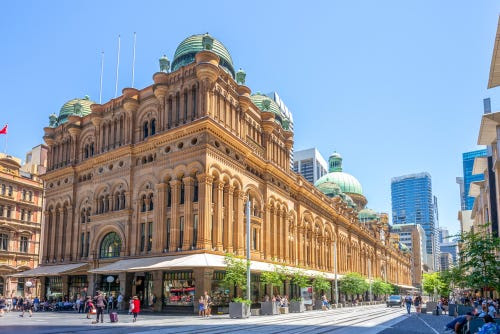
Being a Sydney-sider, I am familiar with the city’s historical buildings, and the places the characters go are places I have been many times. The Great Southern Scientific Fair is held in what is today’s Queen Victoria Building.
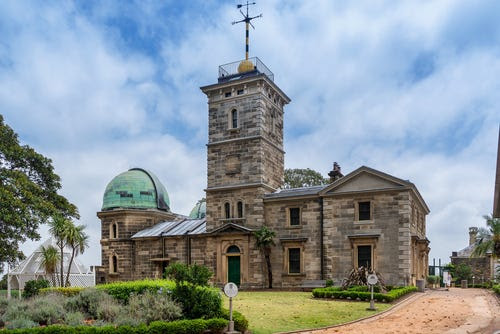
The place where Artemis, Parthena and the gang stay is the Hotel Warriwul. This doesn’t exist but is loosely based on the Langham Sydney (formerly the Observatory Hotel) in The Rocks. This area has always been a place where travellers and sailors stay after long journeys, although the vibe of the “Courage” version is closer to the more upmarket Rocks of today. It was a rough place and rife with bubonic plague in the early 1900s. The Observatory where Artemis is attacked sits on Observatory Hill, and it played an important role in world astronomical history.
Unlike New Londinium, which relies on the Ripley Perpetual Steam Engine for almost all power, only vehicles use this engine in Cadi. All the buildings and manufacturing rely on solar power and the Stirling Perpetual Heat Engine. This is based on a real invention by Robert Stirling, who created the Stirling engine, a closed-cycle regenerative heat engine with a permanently gaseous working fluid that has an application in modern solar power systems. The Stirling engine was ahead of its time in our world. I gave it the place it deserved in the world I created.
 Karen Bayly
Leave a comment